
Jane Davis brings out “An Unchoreographed Life”
Guest post from Jane on her writing life
I recently read Jane Davis’ ”I Stopped Time” and enjoyed its exploration of photography linking generations together. Jane is deeply interested in the links between art and storytelling, and I asked her to write a guest post on her new novel set in the ballet world, An Unchoreographed Life.
Jane Davis writes:
An Unchoreographed Life is the phrase with which Margot Fonteyne described her tumultuous off-stage existence. It seemed an ideal choice for my story of a ballerina who turns to prostitution when she becomes a single mother.
Since the onset of the global recession, prostitution has increased dramatically. In London, it is reported to be at its highest level since the 1700s, when one in eight women was employed in the sex industry. It is said that more than 50% of students fund their degrees with sex work.
I grew up in Merton, within the footprint of Nelson’s paradise estate. The story of his mistress, Emma Hamilton, has always fascinated me. Born into extreme poverty and forced to resort to prostitution, she later became a muse for artists such as George Romney and Joshua Reynolds and a fashionista by bucking the trends. Cast aside by her rich aristocrat lover, she went on to marry his uncle. Completely self-educated, she continually reinvented herself, mixing in diplomatic circles and becoming confidente of both Marie Antoinette and the Queen of Naples. Added to the mix, I was gripped by a 2008 court case, when, in an interesting twist, it was ruled that a prostitute had been living off the immoral earnings of one of her clients. And then I began to imagine what life was like for the child of a prostitute. There was nowhere I could research that hidden subject.
When I began writing An Unchoreographed Life, I wasn’t aware just how topical the subject-matter would become. Since then, Canada has declared that its laws regarding prostitution are draconian. The EU is also proposing radical changes which are likely to come into play in 2015. Whilst this is an extremely complex and emotive issue, in my mind, the proposals introduce yet more conflict. They recommend that selling sex should be legalised, while paying for sex should become illegal. This illogical reversal of the current status seems designed to make it easier for governments to get their hands of the proceeds of this multi-million pound industry.
That said, my novel takes its lead from What Maisie Knew, Henry James’s 19th century commentary on two adults’ appalling behaviour, when a judge rules that they must jointly care for their daughter following the breakdown of their marriage. Although I read Belle de Jour and several similar accounts as part of my research, it was never my intention to replicate them. The heart of my novel is the relationship between an ordinary mother and daughter. It has provoked interesting reactions from beta readers. Those without children feel that the mother, Alison, acts irresponsibly and deserves to have her daughter, Belinda, taken away. Those with children say that they would do all that Alison does for child, and more.
As for the links between ballet and prostitution, these are well chronicled.
In recent years, former prima ballerina Anastasia Volochkova accused the Bolshoi Ballet of turning the theatre into a ‘giant brothel’. “The girls were forced to go along to grand dinners and given advance warning that afterwards they would be expected to go to bed [with guests] and have sex. When the girls asked: ‘What happens if we refuse?’ they were told that they would not go on tour or even perform at the Bolshoi Theatre,” she told Russian News Service.
This sounds shocking to our refined twenty-first century ears, but it’s worth bearing in mind that, as recently as 1905, the Encyclopaedia Britannica still defined ballet as ‘lewd, obscene dancing.’ It is only recently that its stars have achieved a reputation for untouchability and for their status of, as choreographer Frederick Ashton put it, ‘sacred beings’.
1830s, and Paris Opera was under new management. By this time, dancers’ bodies represented the feminine ideals of the day. Perhaps unsurprisingly, backstage became a venue of sexual assignation. The elite from the paying audience were granted exclusive access to the Foyer de la Danse, a large room with mirrored walls and practice barres, situated just behind the stage. Mothers acted as Madams, negotiating lucrative terms with would-be ‘protectors’. In fact, the Paris Opera Ballet School targeted the poor and the desperate for its recruits, nicknaming them, ‘little rats’. One writer of the day commented, Most of the dancers first saw the light of day in a concierge’s lodge.
In 1859, The London Society published an article lavish in its shock-value. Called ‘The Ballet Girls of Paris’, it unveiled the grim reality, saying that ex-ballerinas were to be found ‘in hospitals, in streets begging, or worse, in asylums, in gaols, at the solemn little morgue by the banks of the Seine - very rarely that we do not hear of them in places of misery, in the somber realms of wretchedness. Their lives are frail and brittle, and break often under their burdens’.
One such girl was the model for Degas’s bronze, Little Ballerina. Maria van Goethem was one of 140 dancers employed by the Opera. ‘I could tell you things to make you blush or make you weep’, one anonymous newspaper writer wrote of her. But in Marie’s case, we don’t know what her fate was. She simply disappeared from history.
London had no reason to feel smug or superior. Bournonville, a social commentator of the day, remarked that similar exchanges lacked even ‘the pretension of gallantry’ that accompanied those across the Channel. Some dancers eventually married their ‘patrons’, but this was by no means assured.
The Dictionary of Victorian London named ‘ballet-girls’ among those workers who routinely supplemented their wages with sex work (a list which included milliners, dress-makers, straw bonnet-makers, furriers, hat-binders, silkwinders, tambour-workers, shoe-binders, slop-women, or those who work for cheap tailors, those in pastry-cook, fancy and cigar-shops, and bazaars).
The author went on to comment that ballet-girls had a particularly bad, if well-deserved, reputation. The cause? Poor remuneration, from which they were expected to buy their own shoes and petticoats, silk stockings. Pay was ‘hardly adequate to their expenditure, and quite insufficient to fit them out and find them in food and lodging.’ Gracious enough to acknowledge that ‘low wages inadequate to their sustenance’ was the primary reason ballerinas resorted to prostitution, he also cited ‘natural levity and the example around them; love of dress and display, coupled with the desire for a sweetheart; low and cheap literature of an immoral tendency and absence of parental care and the inculcation of proper precepts. In short, bad bringing up. Girls he interviewed often had fiancés, but spoke to giving up sex work once they were married, not before.
Rewards in ballet have never been financial. Contracts are short-term, and, with a few notable exceptions, careers are short-lived.
Bringing us closer to the present day, in her compelling biography of Margot Fonteyn, Meredith Daneman describes the efforts Fonteyne went to in order to project her public image, ‘a glamorous, chic, personage; gracious and a little aloof.’ A ballerina’s lot had improved, thanks to the fact that ballet was in vogue - but not as much as you might think. Keeping up appearances, Fonteyn was reliant on the generosity of others, from a £3000 mink coat from a fan in New York, to the steak-and-kidney pies that Frederick Browning had sent from the Savoy Hotel to her lodgings. Said John Craxton, Fonteyn’s then lover,”No one seems to have understood the appalling financial situation that she was in when I knew her in ’51.”
Ballerinas, it seems, have had no option but to rely on patronage. And, though we know it shouldn’t, does sex still fall into the equation?
Daneman provides first-hand insight into the intense physicality that being a dancer involves. Bodies are accustomed to being manipulated. Each ends a performance of practice session coated in its partner’s sweat. It knows instinctively the language of the other’s body.
After that degree of proximity, of sex, the comment is made: ‘It’s a detail.’
An Unchoreographed Life is for sale on Amazon now
The Bitter Trade - Extract (PDF)

Goodreads Book Giveaway
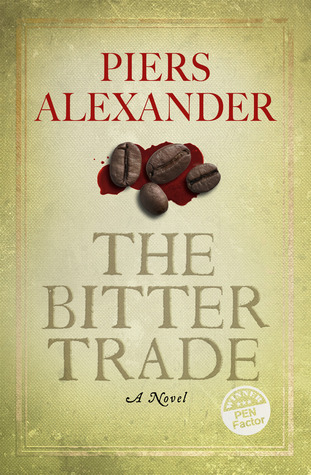
The Bitter Trade
by Piers Alexander
Giveaway ends April 30, 2014.
See the giveaway details at Goodreads.